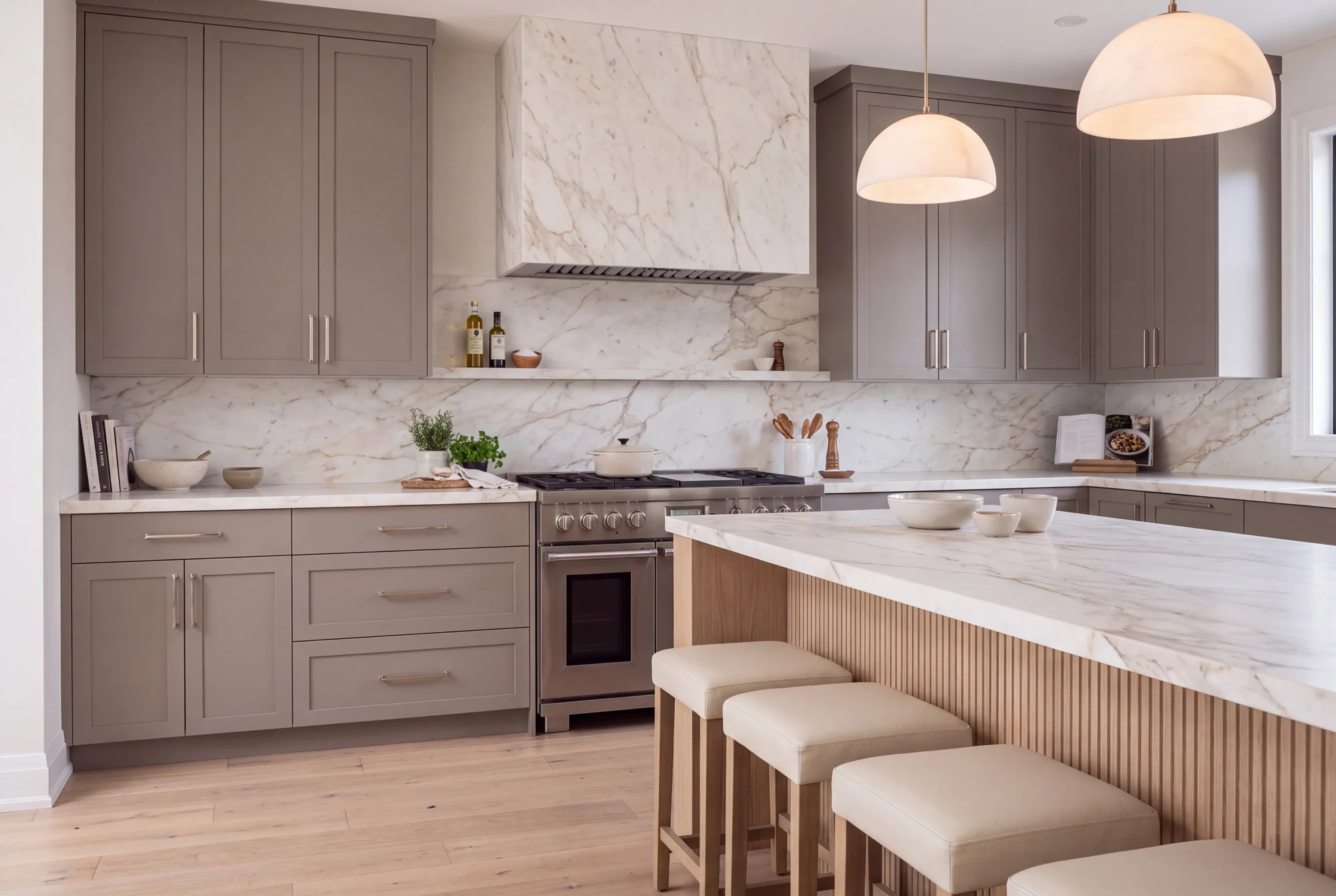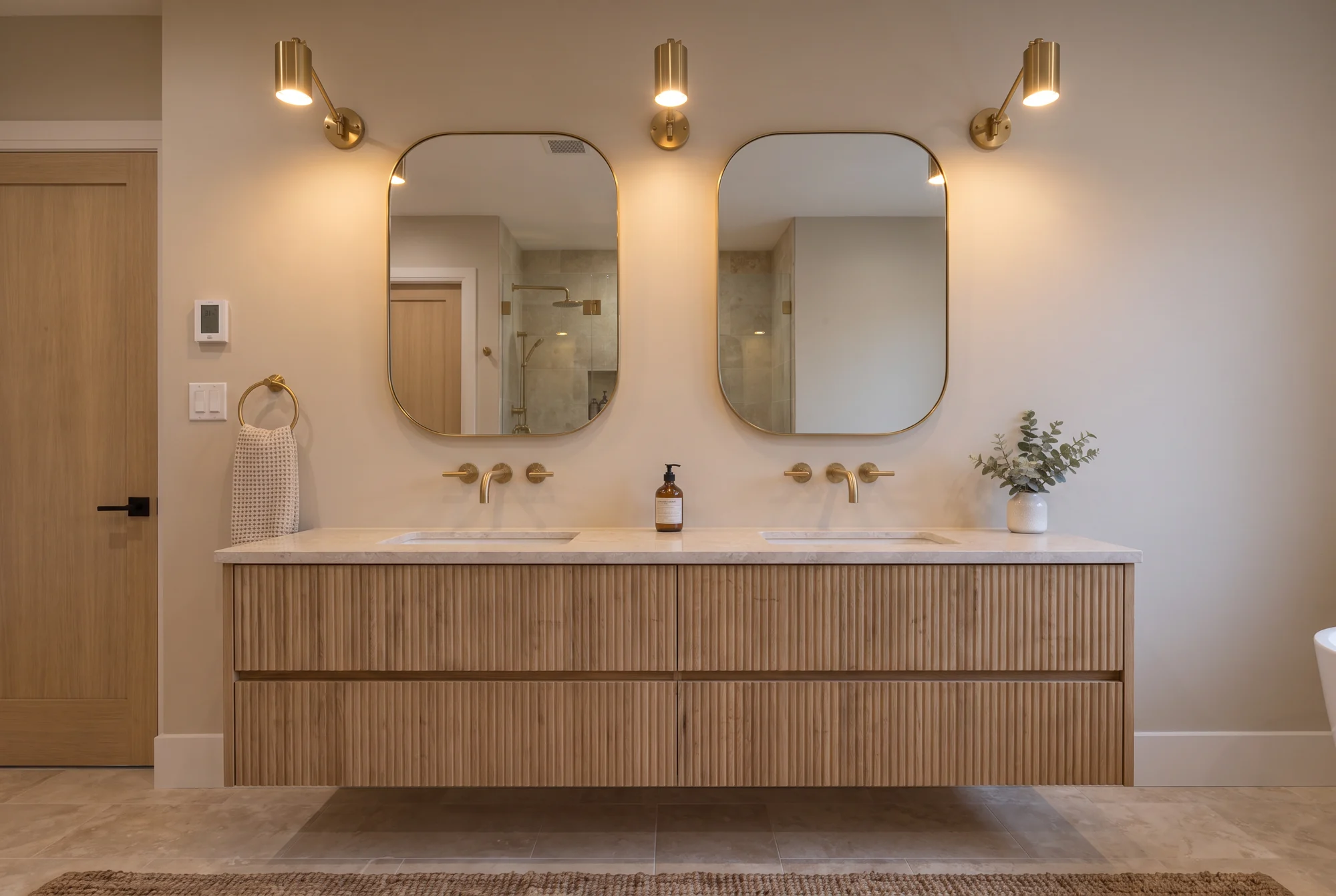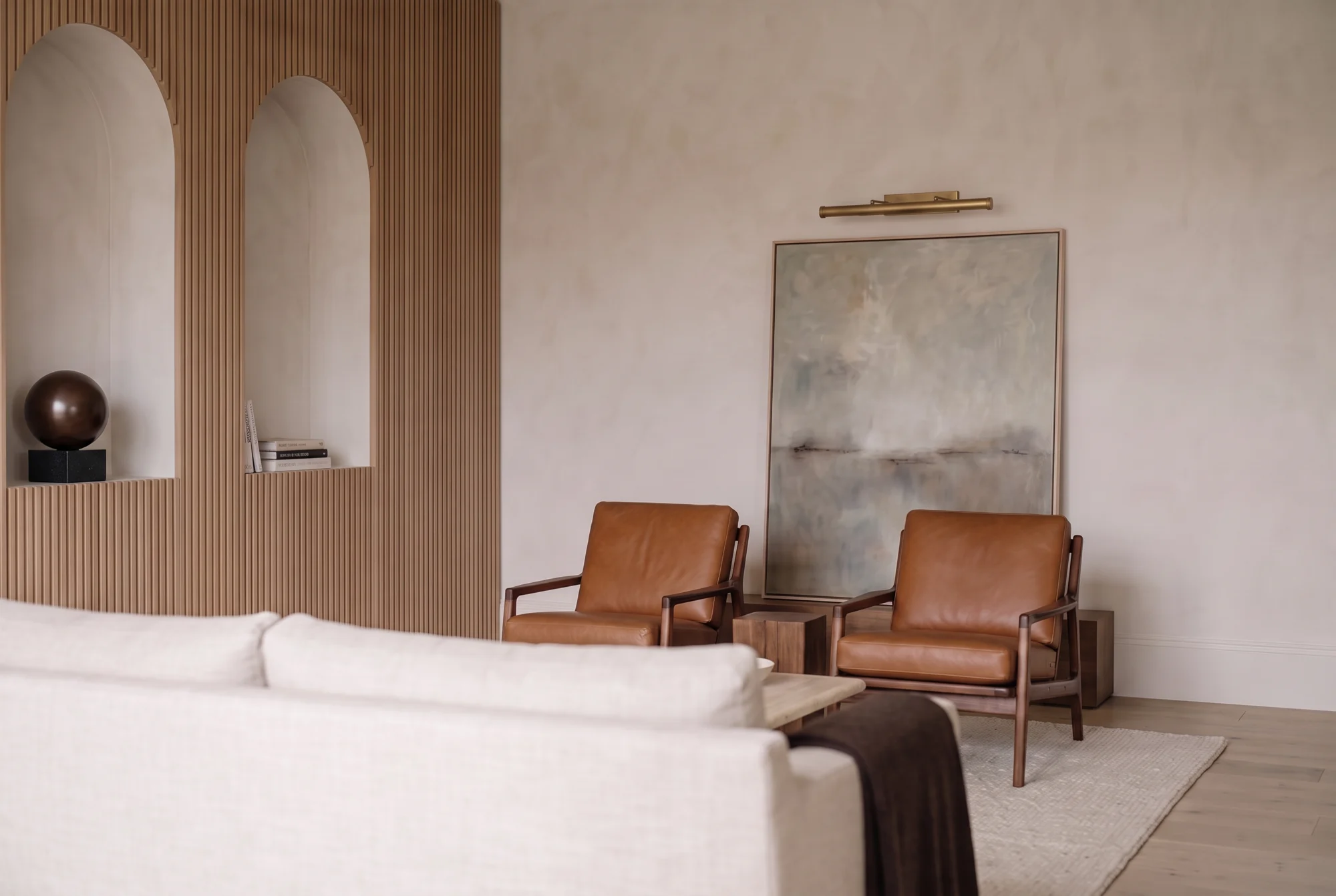
Look for a common thread
A home can feel coherent without repeating the same finish everywhere. The connection might be a warm undertone, a timber family or a consistent approach to hardware.
Choose the thread before choosing every individual item. It becomes a reference when the options start to multiply.
Let different rooms have different roles
A kitchen, a bedroom and a lounge do not need the same atmosphere. One may need clarity and light; another may benefit from depth and softness.
A common material language can support those differences rather than flatten them.
Review the transitions
Pay attention to the places where rooms meet. Flooring edges, door details, sightlines and changes in colour affect how the home reads as a whole.
Look at samples together and move between the rooms with them. The relationship often matters more than the isolated material.
Balance new selections with existing pieces
A meaningful piece of furniture can guide the palette. Keeping something you love can give a room more character than replacing everything at once.
Record what stays before planning the new purchases.
Make a simple decision document
Keep the main finishes, colours and lighting direction in one place. Add product references and note which selections are confirmed.
This is especially helpful when work is phased or decisions are shared between several people.
Use the plan as a guide, not a formula
A good palette gives you enough structure to make decisions confidently while leaving room for the personal. The result should feel like your home.
Elijah & Co. offers whole-home interior design in Oakville with an emphasis on continuity, useful details and the way you live.